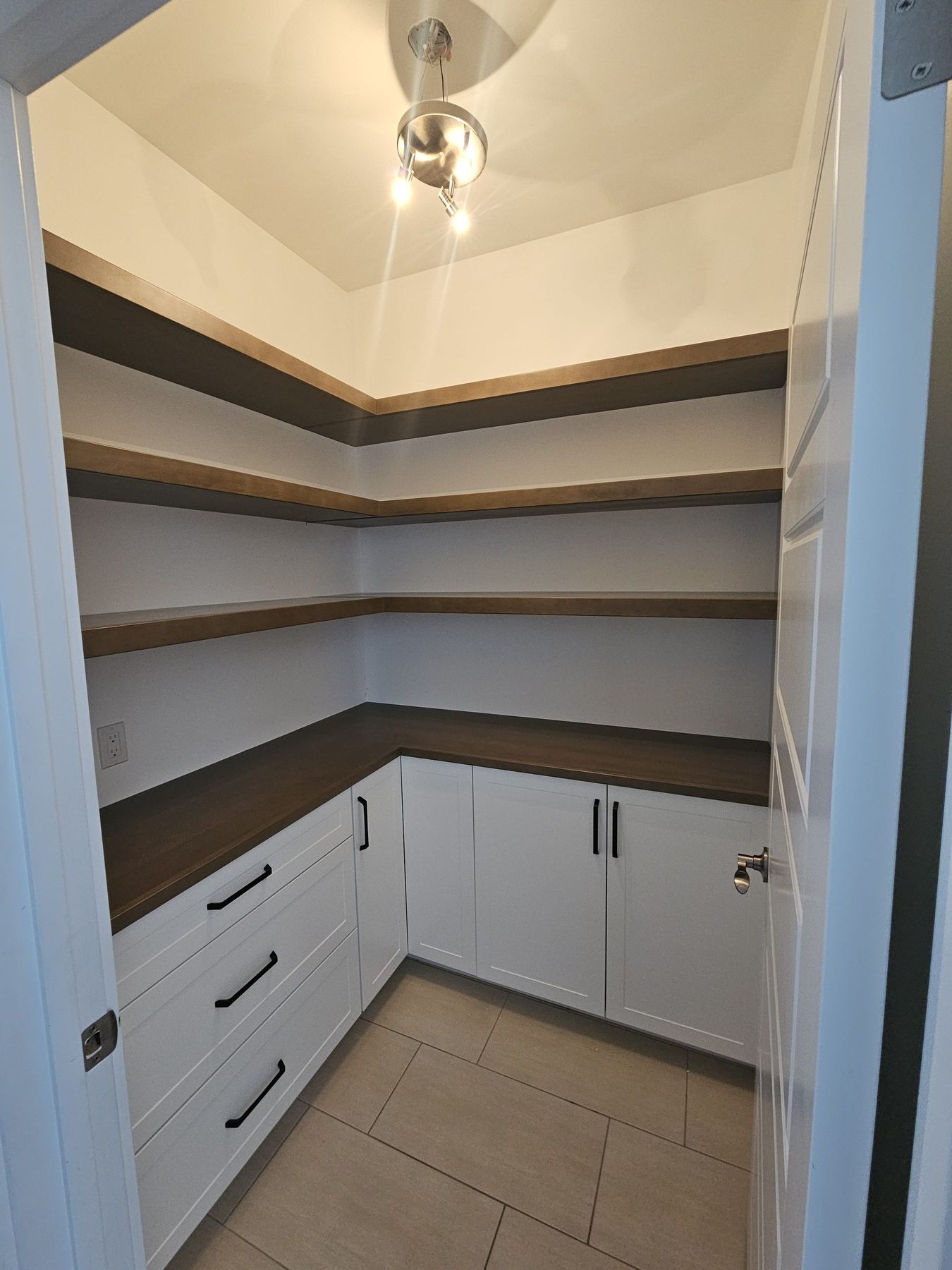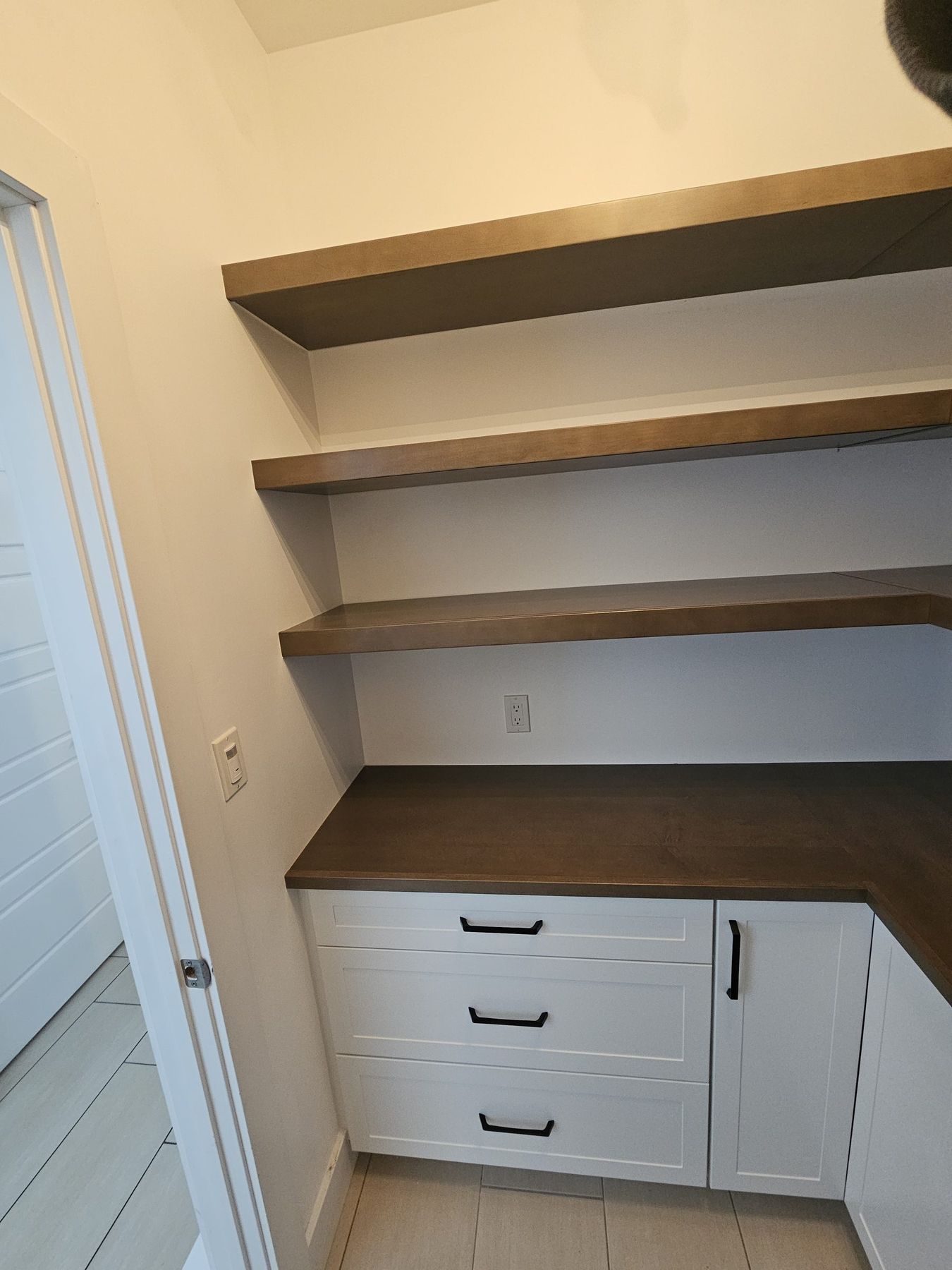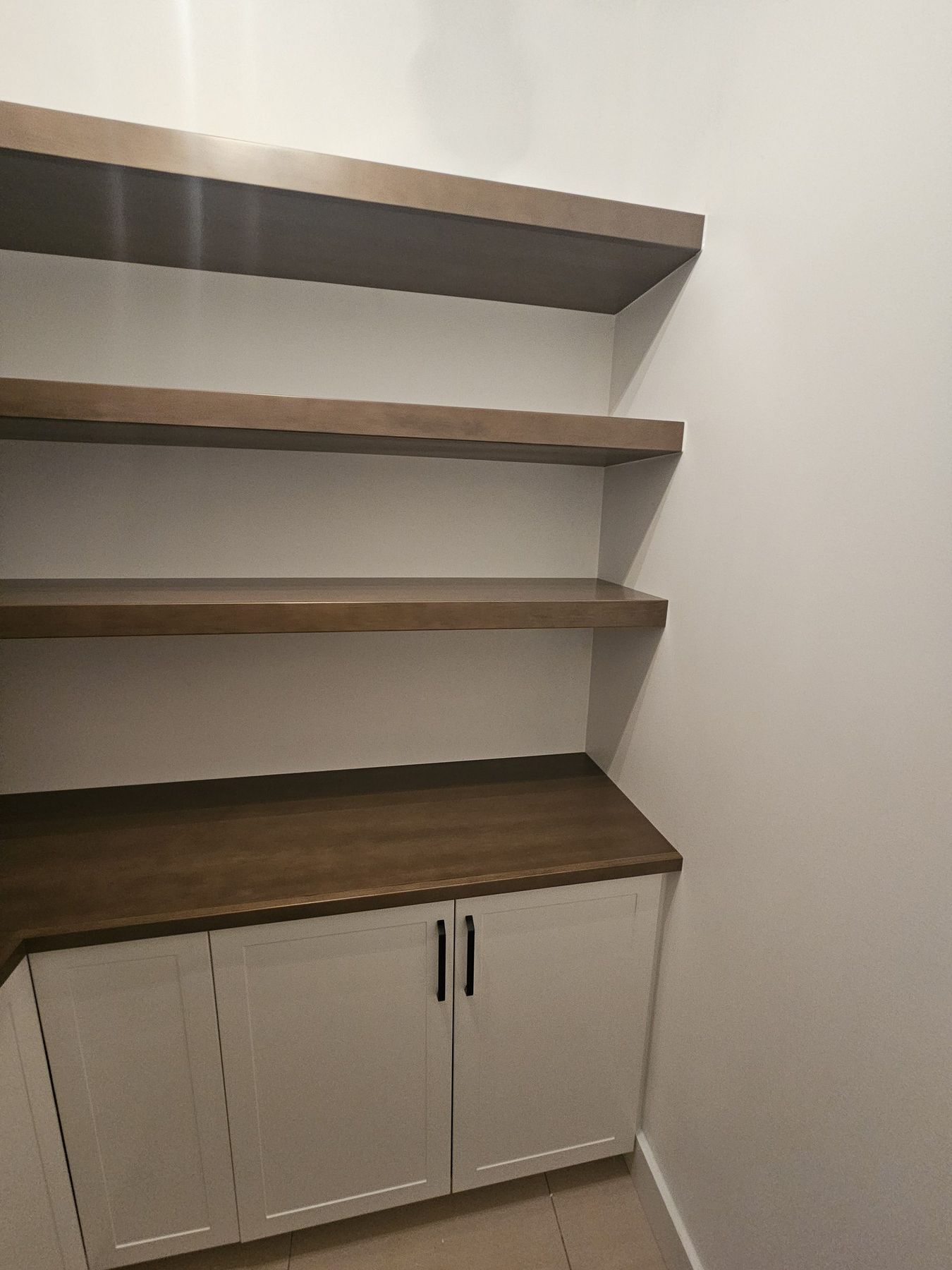
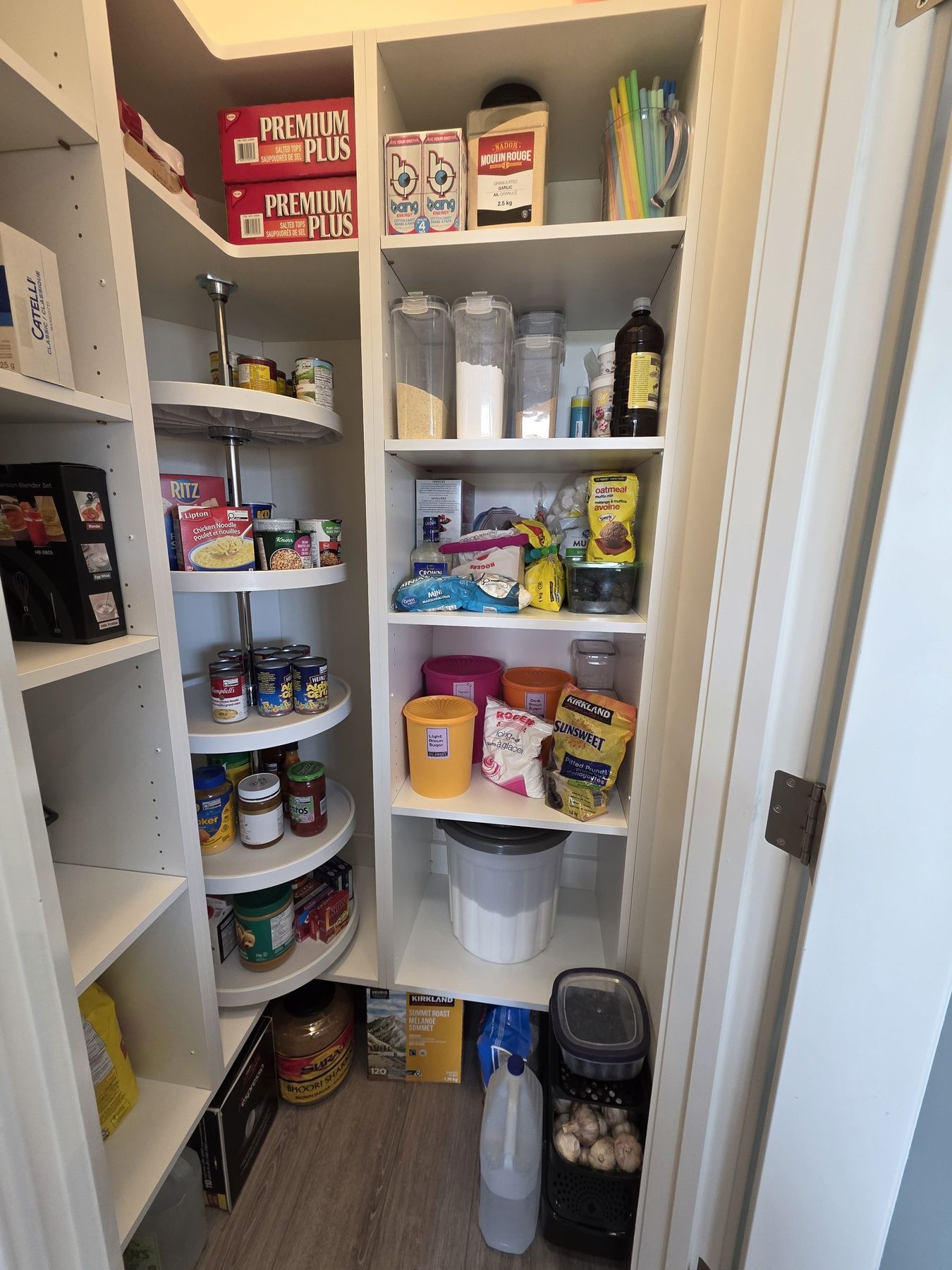
Most pantries don’t fail because they’re too small. They fail because everything lives at the same depth, and whatever goes to the back is forgotten until it expires.
The fix is to stop thinking in shelves and start thinking in zones.
Daily things go at eye level, at the front. Coffee, cereal, the oil and vinegar you reach for every night. If you use it daily and it’s above your shoulder or below your knee, the layout is working against you.
Bulk and backstock go high or low. Flats of canned goods, the second bag of flour, paper towel. You get to them weekly at most, so a step stool is a fair trade.
Small appliances need a landing counter, not a shelf. A stand mixer on a high shelf is a stand mixer you stop using. Keep it at counter height where you can slide it out rather than lift it down.
On depth: anything over about 16 inches turns into a cave. Deep shelves feel generous on a drawing and lose food in practice. We build most pantry shelving between 12 and 16 inches, and we make it adjustable, because what you store in year three is never what you planned in year one.
Corners are where pantries win or lose. A square corner wastes roughly the square of its depth. A tiered lazy Susan turns that dead space into the most-used spot in the room.
One last thing: leave a shelf empty. Every pantry fills up. The one with room to absorb a Costco run is the one still tidy next winter.